Table of Contents
- Key Takeaways
- Quick answer — should you make a homemade hummingbird feeder or buy one?
- Key criteria to consider when making or choosing a feeder
- Safe nectar design and materials
- Number of feeding ports and perch access
- Capacity and refill frequency
- Leak resistance and cleaning access
- Decorative durability and weather resistance
- Choosing the right size and style for your yard
- Common DIY mistakes and what to avoid
- Using unsafe materials
- Poor sealing that causes leaks
- Insufficient feeding ports or perches
- Designs that are hard to clean
- Attractiveness versus usability trade-off
- Benefits and limitations of homemade vs. store-bought feeders
- Practical steps for building a safe homemade feeder
- Frequently Asked Questions
- How often should I clean a hummingbird feeder and what design makes cleaning easiest?
- What nectar capacity is best for a small yard with a few hummingbirds?
- Do hummingbirds prefer bright colors or specific shapes on feeders?
- Can decorative feeders (like novelty shapes) attract as many hummingbirds as plain ones?
- Glossary
Key Takeaways
- DIY feeders are great for customization and low cost, but they must meet safety, cleaning, and leak-resistance standards to protect hummingbirds.
- Feeding ports, full-circle perches, wide-mouth openings, and leak-resistant seals are key features that make commercial glass feeders easier to maintain and more bird-friendly.
- Choose capacity based on visitor frequency and season: small decorative feeders for occasional visitors, larger reservoirs for busy spring/summer yards.
Quick answer — should you make a homemade hummingbird feeder or buy one?
Choose a homemade feeder if you want inexpensive customization and are confident you can use safe materials, provide easy cleaning access, and prevent leaks. Opt for a ready-made glass feeder when you prefer durability, decorative value, reliable seals, and proven feeding features like multiple ports and full-circle perches that reduce maintenance and attract more birds.
Key criteria to consider when making or choosing a feeder
Safe nectar design and materials
Use food-safe, non-toxic materials and avoid paints or glues that can leach into nectar. Commercial glass feeders avoid these risks because their reservoirs are made from hand-blown glass and come with designed feeding ports rather than improvised holes.
Number of feeding ports and perch access
Multiple feeding ports and a 360° perch ring reduce crowding and allow several hummingbirds to feed at once. If you build your own, plan for at least two feeding sites and a continuous perch so birds can share access comfortably.
Capacity and refill frequency
Choose capacity for your bird traffic and season. A small decorative feeder is fine for occasional visitors; for busy yards and hot months, a larger reservoir reduces refill frequency and spoilage risk.
Leak resistance and cleaning access
Wide-mouth openings make cleaning simple, and leak-resistant seals prevent wasted nectar and ants. Many store feeders feature wide mouths and engineered seals that are hard to match in DIY builds without the right parts.
Decorative durability and weather resistance
Decorative shapes and colors attract hummingbirds, but materials should stand up to sun and rain. Commercial hand-blown glass offers both visual appeal and long-term durability compared with many homemade materials.
Choosing the right size and style for your yard
Match feeder size and style to yard activity, seasonal needs, and how often you can clean and refill nectar.
Below is a quick comparison to help decide between smaller decorative feeders and larger-capacity options based on common decision factors.
| Factor | Small Decorative Feeder | Large Capacity Feeder |
|---|---|---|
| Best for | Occasional visitors, decorative impact | High traffic yards, spring-summer use |
| Cleaning frequency | Easier to empty and scrub often | Fewer refills but requires thorough cleaning |
| Refill frequency | Frequent refills | Less frequent refills |
| Attractiveness | Novelty shapes/colors draw attention | Bold colors and larger perches support more birds |
| Durability | Varies by material | Typically more robust (hand-blown glass) |
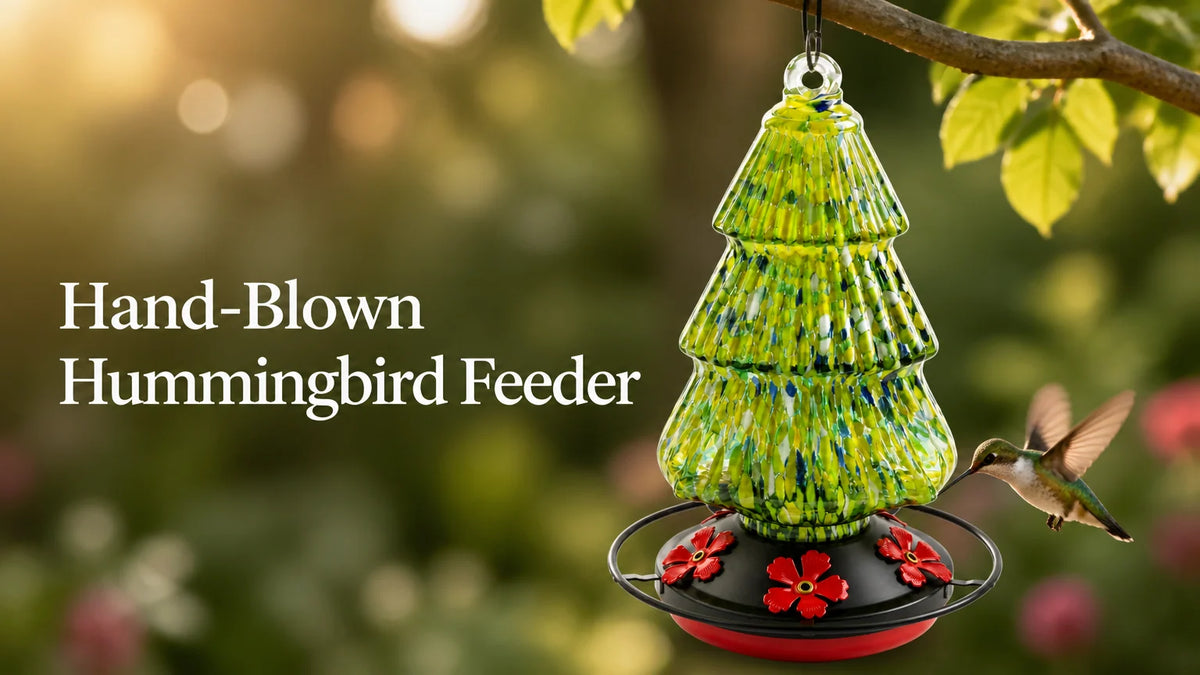
For a balanced pick that combines decorative appeal with practical capacity and bird-friendly features, consider a hand-blown glass option that offers a pleasing shape and functional design.
For a festive, decorative choice that still meets feeding needs, see the Christmas Tree Glass Hummingbird Feeder – 3 Ports & 360° Perch which blends holiday style with feeding features.
Common DIY mistakes and what to avoid
Using unsafe materials
Do not use containers or paints not rated for food use; they can contaminate nectar. Commercial glass feeders avoid this by using hand-blown glass reservoirs and molded feeding ports designed for birds.
Poor sealing that causes leaks
Improper seals create drips that waste nectar and attract ants. Many store feeders include leak-resistant seals to prevent these issues and preserve nectar quality.
Insufficient feeding ports or perches
One or two tiny holes lead to crowding and territorial behavior. A feeder with multiple ports and a full-circle perch supports natural feeding patterns and reduces stress.
Designs that are hard to clean
Small openings and awkward shapes trap mold and yeast. Choose or build feeders with a wide-mouth design to make thorough cleaning practical.
Attractiveness versus usability trade-off
Novelty shapes can be visually attractive but may not provide practical perching or adequate port placement. If you want novelty, select or build designs that maintain bird-friendly features like accessible ports and perches.
Benefits and limitations of homemade vs. store-bought feeders
- Homemade benefits: inexpensive, customizable colors/shapes, fun project for crafters.
- Homemade limitations: risk of unsafe materials, leaks, and cleaning difficulties if not properly designed.
- Store-bought benefits: engineered feeding ports, full-circle perches, leak-resistant seals, and wide mouths for cleaning—often in decorative hand-blown shapes.
- Store-bought limitations: higher upfront cost and less DIY uniqueness.
Practical steps for building a safe homemade feeder
- Choose a food-safe reservoir (glass jars are preferable) with a removable lid or wide mouth.
- Plan for at least two feeding ports and a continuous perch; avoid tiny holes that are hard to clean.
- Use silicone gaskets or rubber seals to prevent leaks and test the assembly before filling with nectar.
- Make the feeder easy to disassemble for weekly cleaning—hot water and mild soap or a vinegar rinse is effective.
- Place feeders in shaded locations to slow nectar spoilage, and monitor for ants and wasps.
Common mistakes to avoid: using painted plastics near nectar, making ports too small to clean, and ignoring venting or drainage that prevents mold growth.
Frequently Asked Questions
How often should I clean a hummingbird feeder and what design makes cleaning easiest?
Clean feeders at least once a week, and more often in hot weather. Designs with a wide-mouth opening and removable parts make cleaning fastest and most thorough, allowing you to scrub all surfaces to prevent mold and fermentation.
What nectar capacity is best for a small yard with a few hummingbirds?
For a small yard with light visitation, a smaller reservoir reduces spoilage risk because nectar is refreshed frequently. Monitor visitor numbers and adjust: if you find you’re refilling multiple times daily, move to a larger-capacity feeder.
Do hummingbirds prefer bright colors or specific shapes on feeders?
Hummingbirds are attracted to bright colors—especially red—and to visible nectar sources. Colorful glass and flower-shaped feeding ports help attract birds, but functional port placement and perch access are equally important.
Can decorative feeders (like novelty shapes) attract as many hummingbirds as plain ones?
Yes, novelty shapes can attract hummingbirds if they include practical features: multiple ports, accessible perches, and easy cleaning access. Decorative appeal helps visibility, but functionality determines how well birds can feed.
Glossary
- Feeding port: the opening where a hummingbird inserts its bill to reach nectar.
- Perch ring: a circular or continuous perch that allows multiple hummingbirds to feed around the feeder.
- Wide-mouth design: a reservoir opening large enough for easy hand cleaning.
- Leak-resistant seal: a gasket or fitting that prevents nectar from dripping out of the feeder.
- Hand-blown glass: a decorative, durable glass reservoir shaped by artisans, often used for feeders.
The Christmas Tree Glass Hummingbird Feeder – 3 Ports & 360° Perch is a relevant pick for DIY-minded gardeners who want a festive, hand-blown glass option that combines decorative style with practical feeding features.

Christmas Tree Glass Hummingbird Feeder – 3 Ports & 360° Perch
Add a festive touch to your yard with a hand-blown Christmas tree hummingbird feeder featuring 3 flower-shaped feeding ports, a 360° perch and easy refilling.
Homemade feeders can be rewarding if you follow safety, cleaning, and design rules—otherwise a handcrafted glass feeder gives decorative appeal with bird-friendly engineering. Consider your time for maintenance and how many hummingbirds you expect to host when choosing the best option.